Flow
The Silent Strength Flow (Minimal Transitions, Maximum Burn)

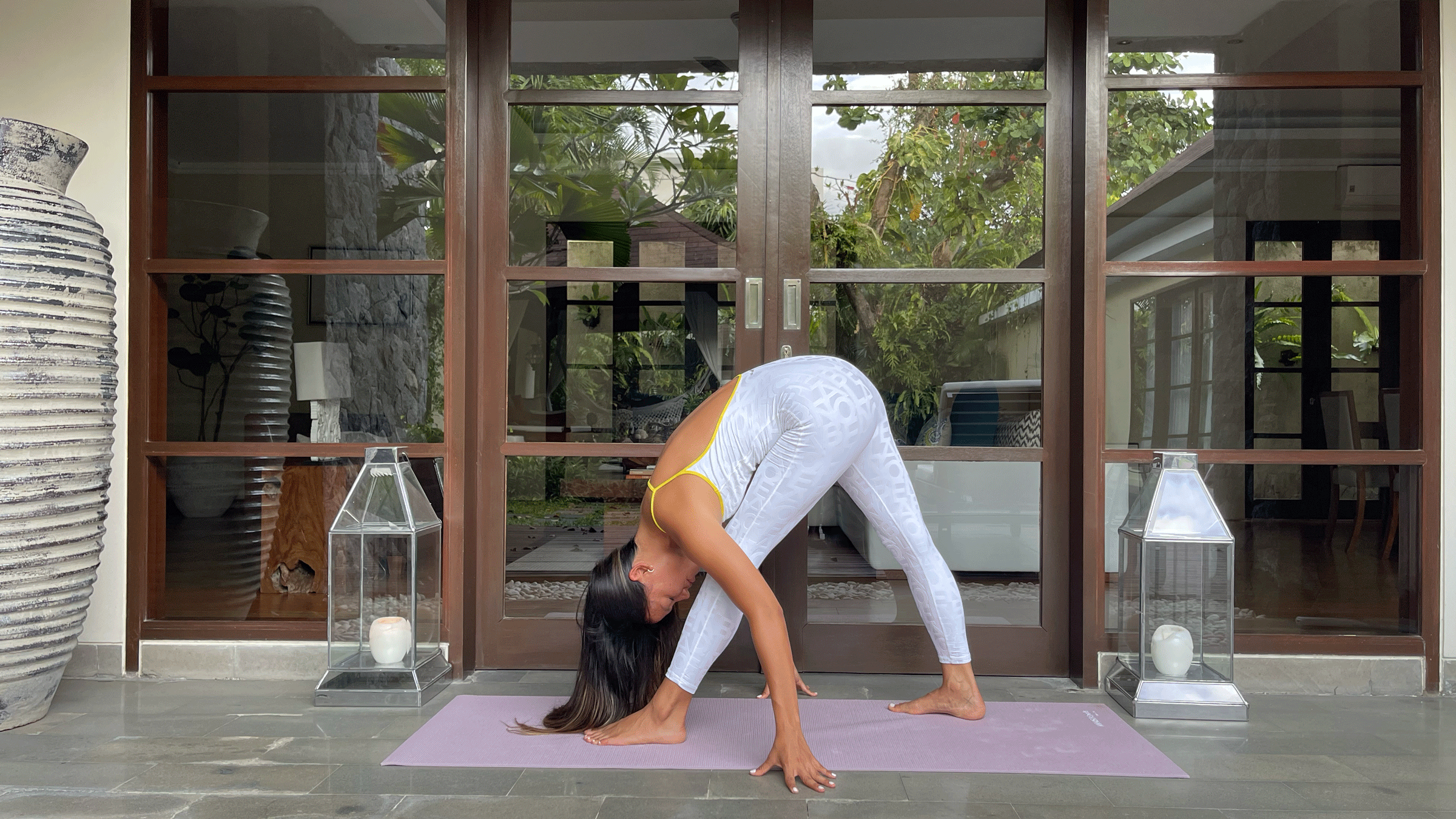
Silent Strength Flow is not loud, flashy, or acrobatic. It is steady, deliberate, and surprisingly intense. Instead of jumping from pose to pose in rapid succession, I move slowly, often lingering longer than my muscles would prefer. The burn builds quietly, almost politely at first, before it deepens into something that demands full attention.
This style of practice grew from my desire to feel stronger without relying on constant motion. Fast transitions can be energizing, but they sometimes mask weaknesses. By reducing transitions and holding shapes with intention, I remove momentum from the equation. What remains is pure muscular engagement and a level of awareness that feels both grounding and humbling.
In Silent Strength Flow, the intensity does not come from speed. It comes from time under tension. Holding Warrior II for eight steady breaths or hovering in a low lunge without collapsing into the hips reveals truths about endurance that quick flows never fully expose.
Why Minimal Transitions Change Everything
Minimal transitions shift the spotlight from choreography to control. Without the distraction of complex sequences, I notice where my balance wavers and where my strength fades. Each micro-adjustment becomes meaningful because there is no rushing to the next pose to escape discomfort.
Fewer transitions also create a meditative rhythm. Moving slowly from High Plank to Chaturanga and pausing halfway down forces me to recruit muscles with precision. I cannot rely on gravity or momentum to carry me through. My core, shoulders, and legs must cooperate in a steady, sustained effort.
The absence of constant movement heightens my awareness of alignment. I feel the distribution of weight across my palms, the subtle rotation of my thighs, and the lift of my ribcage. In this slower pace, the body becomes a field of sensation rather than a vehicle rushing toward the next destination.
Building Heat Without High Impact
Heat builds differently in Silent Strength Flow. Instead of explosive bursts, warmth accumulates like embers glowing brighter with each breath. A long Chair Pose hold can feel more demanding than a dozen quick Sun Salutations because the muscles never get a break.
I notice how my quads begin to tremble after several breaths in a deep lunge. My shoulders start to shake in Dolphin Pose when I maintain steady pressure through my forearms. That trembling is not failure; it is adaptation in progress. Muscles strengthen by staying engaged under load, and this practice embraces that principle fully.
The beauty of this method is that it remains joint-friendly. Without jumping or abrupt directional changes, my knees and wrists experience less impact. The burn is muscular rather than jarring, which allows me to train consistently without feeling depleted.
The Mental Edge of Staying Still
Holding poses longer tests more than physical strength. The mind reacts quickly to sustained effort. It negotiates, complains, and suggests shortcuts. In those moments, I meet the real practice.
Remaining in a steady Warrior III for multiple breaths requires focus that borders on stubbornness. My thoughts drift toward relief, yet I learn to stay. Each breath becomes an anchor, guiding me through discomfort without panic.
This mental steadiness carries beyond the mat. The patience cultivated in long holds translates into resilience in daily life. Sitting with challenge, rather than rushing away from it, has reshaped how I handle stress and uncertainty.
A Sample Silent Strength Sequence
A typical Silent Strength Flow begins with a slow, controlled Sun Salutation. I step back instead of jumping, lowering halfway and pausing before pressing up. From Downward Dog, I lift one leg into Three-Legged Dog and hover there for several breaths before stepping forward with care.
Low Lunge becomes a testing ground. I sink deeply while keeping my back leg active and lifted. Instead of transitioning immediately to the next pose, I raise my arms and hold, feeling the stretch in my hip flexors and the fire in my front thigh.
From there, I move into Warrior II and stay long enough to sense my edges. The back leg presses firmly into the mat, and my gaze softens while my shoulders relax. A slow shift into Reverse Warrior keeps the lower body steady, increasing the challenge without adding unnecessary movement.
Plank Pose follows, and I hold with deliberate engagement. My core tightens, my heels press back, and my breath stays even. Rather than dropping quickly into Chaturanga, I lower halfway and hover, resisting gravity with controlled strength.
The sequence continues on the second side with equal patience. By the end, I have not performed dozens of poses, yet my body feels thoroughly worked. The simplicity of the sequence allows depth rather than distraction.
Breath as the Silent Driver
Breath governs the entire experience. Slow inhales create space in tight areas, while long exhales help me stay composed in the heat of effort. Without steady breathing, the holds become frantic and unsustainable.
I often count my breaths in sets of five or eight. This structure provides a mental container for the intensity. Instead of wondering how much longer I must endure, I focus on completing the next inhale and exhale with intention.
The breath also prevents me from gripping unnecessarily. In a prolonged Chair Pose, tension can creep into my jaw or shoulders. A conscious exhale releases that excess strain while maintaining muscular engagement where it matters.
Small Adjustments, Big Results
In minimal-transition flows, subtle adjustments make a noticeable difference. Rotating my inner thighs slightly in Plank stabilizes my hips. Pressing evenly through the four corners of my feet in standing poses enhances balance and power.
These refinements become clearer because I am not rushing. With time to explore each shape, I sense where energy leaks occur. A slight shift of the pelvis or engagement of the lower belly can transform a shaky hold into a stable one.
Progress in this style of practice is gradual but undeniable. The holds feel less overwhelming over weeks of consistent effort. My muscles respond with increased endurance, and my alignment improves without dramatic overhauls.
Embracing the Shake
The shaking that emerges during long holds once felt embarrassing. Now I welcome it as a sign that my body is working honestly. Muscles activate in ways that are not always graceful, and that authenticity feels refreshing.
I have learned not to interpret trembling as weakness. Instead, it marks the threshold where growth begins. Staying present through that vibration builds confidence that extends beyond the mat.
That shake also demands humility. It reminds me that strength is not static. It requires ongoing attention and practice, and Silent Strength Flow provides the perfect laboratory for that exploration.
Recovery Within the Flow
Despite its intensity, Silent Strength Flow includes moments of intentional recovery. A slow transition into Child’s Pose offers a brief pause without collapsing entirely. The breath deepens, and I prepare for the next sustained effort.
These recovery moments are strategic rather than indulgent. They maintain the rhythm of the practice while preventing burnout. The contrast between stillness and effort sharpens my appreciation for both.
Balancing effort and rest keeps the flow sustainable. The goal is not exhaustion but resilience. By honoring both challenge and recovery, the practice remains empowering rather than punishing.
Long-Term Benefits of Sustained Holds
Over time, I have noticed improvements in both strength and posture. Holding poses like Side Plank for extended breaths has strengthened my obliques and shoulder stabilizers. Standing poses have enhanced the endurance of my legs in ways that translate to daily movement.
My balance has also improved significantly. Sustained single-leg poses demand micro-corrections that train the nervous system. That refined coordination supports everything from walking on uneven ground to maintaining stability during workouts.
Perhaps the most profound benefit is the sense of quiet confidence that develops. Knowing I can remain steady in discomfort fosters trust in my capabilities. Silent Strength Flow becomes more than a workout; it becomes a mindset.
How to Begin Your Own Silent Strength Practice
Starting does not require an elaborate plan. Selecting five or six foundational poses and committing to longer holds is enough. I recommend beginning with Chair Pose, Low Lunge, Warrior II, Plank, and Side Plank.
Focus on breath count rather than time. Holding each pose for five slow breaths can feel surprisingly demanding. As endurance builds, extend to eight or ten breaths while maintaining proper alignment.
Pay attention to quality over quantity. Fewer poses executed with intention deliver more benefit than a rapid sequence performed carelessly. Consistency matters more than intensity at the start.
Listening to the Body’s Signals
Intensity must be balanced with awareness. Distinguishing between muscular effort and joint discomfort is essential. A deep burn in the thighs signals strength work, while sharp pain in the knees indicates a need for adjustment.
I check in frequently during holds. Softening the gaze and scanning the body helps identify unnecessary tension. Small modifications, such as widening the stance or lowering the back knee, maintain safety without abandoning the challenge.
Rest days are equally important. Silent Strength Flow can be demanding, and muscles need time to repair. Alternating with gentler practices supports longevity.
The Quiet Satisfaction of Completion
Finishing a Silent Strength session leaves me feeling accomplished in a subtle way. There is no dramatic sweat-soaked finale or explosive peak pose. Instead, a steady glow of effort lingers throughout my body.
The satisfaction stems from having stayed present. I did not rush or distract myself with complexity. I simply showed up, held steady, and breathed through each wave of intensity.
This practice continues to teach me that strength does not have to be loud. It can develop quietly, breath by breath, in the stillness between transitions. Silent Strength Flow proves that minimal movement can deliver maximum burn, and that steady commitment often surpasses flashy effort.


The Long-Term Mindset of Strong Practitioners

Habit Stacking for Daily Yoga

How to Reignite a Stalled Practice

Mastering Patience in Skill-Based Poses

The 1% Better Method on the Mat

The 7-Day Reset Challenge
How to Reignite a Stalled Practice

The 25-Minute Sweat Flow That Feels Like a Reset Button

The Silent Strength Flow (Minimal Transitions, Maximum Burn)

The Ladder Flow Method for Progressive Strength
The 7-Day Reset Challenge