Discipline
Mastering Patience in Skill-Based Poses

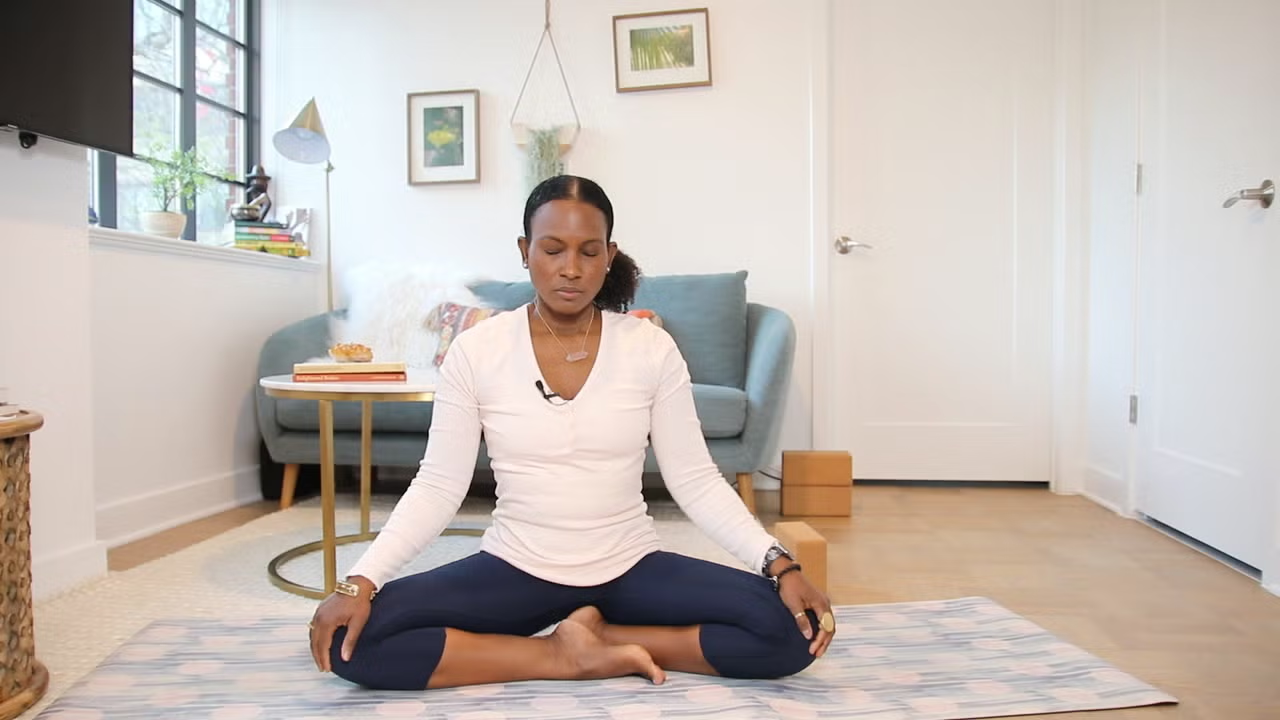
Skill-based poses reveal more about my inner state than my flexibility or strength ever could. The moment I begin working toward an arm balance or an inversion, impatience rises to the surface and demands attention. My body might be ready for the challenge, but my mind often wants the result long before it has earned the process. Over time, I have realized that mastering these poses is less about physical capability and more about cultivating patience that runs deep and steady.
Patience in yoga is not passive waiting. It is an active, engaged presence with what is happening right now. Skill-based poses such as arm balances, inversions, and deep backbends require repetition, humility, and the willingness to wobble. Each attempt becomes a mirror reflecting how I respond to difficulty, progress, and delay.
In my early years of practice, I measured success by whether I could “do” the pose. Now I measure it by how I show up for it. The shift from outcome to process changed everything. The poses did not necessarily come faster, but they began to feel more meaningful.
The Nature Of Skill-Based Poses
Skill-based poses demand coordination, strength, flexibility, and focus all at once. Think of transitions into Crow, handstands against the wall, or slowly lowering from Chaturanga. These movements require layers of integration, and they rarely come together overnight. My nervous system has to adapt just as much as my muscles do.
Unlike passive stretches, these poses ask me to manage fear and uncertainty. Balancing on my hands or flipping upside down activates instincts that prefer stability. Patience becomes essential because rushing through fear only reinforces it. Each careful attempt builds familiarity and trust.
I have noticed that progress in these poses often arrives in small, almost invisible increments. One day my hips lift a little higher, or my balance lasts a second longer. Those subtle shifts teach me to appreciate nuance rather than dramatic breakthroughs. Patience grows when I learn to value these quiet victories.
Confronting The Desire For Quick Results
Modern culture rewards speed and visible success. That mindset easily slips onto the mat, especially when I scroll through images of advanced poses online. Comparing my timeline to someone else’s can ignite frustration before I even begin. Skill-based poses become a test of ego rather than a journey of growth.
I have felt the urge to push aggressively toward a pose just to prove that I could. That approach often led to sloppy alignment or minor injuries that forced me to step back. Nothing humbles impatience like having to rest because I ignored my limits. Those moments taught me that forcing progress delays it.
Real progress requires a long view. Instead of demanding immediate mastery, I remind myself that skill development is cumulative. Each drill, each failed attempt, and each pause contributes to eventual stability. Patience becomes easier when I trust that effort compounds over time.
Building Strength With Steady Commitment
Strength-based poses such as arm balances do not simply appear because I want them to. They require consistent conditioning of wrists, shoulders, and core muscles. I began dedicating time to foundational exercises without attaching them to a specific end goal. This shifted my focus from the final pose to the preparation that makes it possible.
Repetition once felt boring to me, especially when I did not see quick improvement. Over time, I began to treat repetition as a meditation in motion. Each plank hold or slow push-up became an opportunity to refine alignment and breath. That steady commitment transformed my relationship with effort.
Patience deepened as I learned to respect rest days. Muscles rebuild and strengthen outside of the most intense moments. Allowing space for recovery helped me understand that growth is not linear. Sometimes the most patient act is stepping back and trusting the process.
Navigating Fear In Inversions
Inversions expose vulnerability in a way few other poses do. Turning upside down disrupts my sense of orientation and control. Even with physical strength, fear can block progress more effectively than any tight muscle. Patience becomes the bridge between fear and freedom.
I started working on handstands at the wall, focusing first on comfort rather than perfection. Instead of trying to balance in the middle of the room, I practiced simply kicking up with control. This incremental approach calmed my nervous system. Each small success reduced the intensity of fear.
Breath awareness played a critical role in this journey. Holding my breath amplified anxiety and tension. Steady, rhythmic breathing signaled safety to my body. With time, patience allowed fear to soften into curiosity.
Embracing The Plateau
Plateaus used to feel like failure. I would practice a pose for weeks with no visible improvement and assume I had reached my limit. That mindset created tension and self-doubt. Skill-based poses seemed to mock my efforts.
Gradually, I began to see plateaus as integration periods. Beneath the surface, subtle adaptations were taking place. My body was building resilience and coordination even if I could not see dramatic change. Patience allowed me to continue practicing without demanding proof.
On several occasions, a pose that felt impossible suddenly clicked after weeks of stagnation. The breakthrough appeared sudden, but it was the result of accumulated effort. Those experiences reinforced the value of staying steady during the quiet phases.
Refining Alignment With Care
Skill-based poses are unforgiving when alignment is careless. A slight shift in hand placement or hip position can mean the difference between stability and collapse. Early in my practice, I rushed through setup in eagerness to reach the full expression. That impatience often led to frustration.
Now I spend more time preparing than performing. I place my hands deliberately, engage specific muscles, and visualize the movement before initiating it. This careful preparation slows me down in the best way. Patience becomes embedded in the structure of the pose.
Slowing down also enhances safety. I have learned to distinguish between productive discomfort and harmful strain. Listening closely to subtle signals prevents unnecessary setbacks. Patience, in this sense, is a form of self-respect.
Cultivating Mental Resilience
Skill-based poses challenge more than physical capacity. They expose inner narratives about capability and worth. If I fall out of a balance repeatedly, thoughts of inadequacy can creep in. Patience requires me to meet those thoughts without attaching to them.
I practice reframing failure as feedback. Each fall provides information about where strength or coordination needs refinement. Viewing mistakes as data removes much of their emotional charge. This mental shift makes persistence feel lighter.
Meditation has supported this resilience. Sitting quietly and observing my breath trains the same patience required on the mat. The ability to witness discomfort without reacting impulsively transfers directly into challenging poses. My mental steadiness grows alongside my physical skills.
The Role Of Consistent Practice
Consistency outweighs intensity in the long run. Short, focused sessions practiced regularly yield more progress than sporadic bursts of effort. I learned that dedicating even fifteen minutes to drills several times a week built stronger foundations than occasional marathon practices.
Routine cultivates familiarity. Repeating similar movements trains my body to recognize patterns. That recognition reduces hesitation and builds confidence. Patience flourishes in environments where effort is steady and predictable.
Consistency also builds trust in myself. Each time I show up, even on low-energy days, I reinforce commitment. That reliability fosters a deeper sense of patience because I no longer feel rushed to accomplish everything at once.
Letting Go Of Comparison
Comparison is one of the quickest ways to erode patience. Watching others float effortlessly into advanced poses can trigger self-criticism. I have experienced moments of envy in group classes or online spaces. Those feelings distract from my own path.
Every body carries unique strengths and limitations. Bone structure, previous injuries, and athletic background all influence progression. Recognizing this diversity helped me release unrealistic expectations. Patience grows when I honor my individual timeline.
Turning inward during practice reduces the noise of comparison. Focusing on breath and sensation anchors me in my own experience. Skill-based poses become personal explorations rather than public performances.
Integrating Breath And Movement
Breath acts as an anchor during complex poses. Coordinating inhale and exhale with transitions stabilizes both body and mind. I often notice impatience arise when my breathing becomes shallow or erratic. Slowing the breath naturally slows the urge to rush.
In challenging balances, I intentionally soften my gaze and lengthen my exhale. This subtle adjustment relaxes unnecessary tension. The pose feels more spacious even if the external shape remains the same. Patience becomes embodied through breath.
Over time, breath awareness extended beyond difficult poses. It influences how I move through entire sequences. Skill development feels less like a battle and more like a conversation between effort and ease.
Trusting The Long Arc Of Practice
Mastery does not arrive in a single triumphant moment. It unfolds gradually, shaped by countless attempts and adjustments. Reflecting on my journey, I see how much patience has reshaped not only my practice but also my character.
Skill-based poses once symbolized achievement for me. Now they represent dialogue and discovery. Each attempt invites curiosity about what is possible today, not what should have happened yesterday. That mindset creates a sense of freedom even within disciplined effort.
Patience continues to evolve as I explore new challenges. There will always be another pose that tests my limits. Instead of fearing that edge, I welcome it as an opportunity to deepen resilience and presence.
Mastering patience in skill-based poses is an ongoing process rather than a final destination. The mat offers endless chances to practice steadiness in the face of difficulty. Each wobble, fall, and recalibration strengthens more than muscle. Through patience, I cultivate a practice rooted not in performance, but in awareness and growth that extends far beyond the boundaries of any single pose.



The Long-Term Mindset of Strong Practitioners

Habit Stacking for Daily Yoga

How to Reignite a Stalled Practice

Mastering Patience in Skill-Based Poses

The 1% Better Method on the Mat

The 7-Day Reset Challenge

The 25-Minute Sweat Flow That Feels Like a Reset Button
The 1% Better Method on the Mat

The Silent Strength Flow (Minimal Transitions, Maximum Burn)
The 7-Day Reset Challenge

Resetting After Travel and Long Flights
