Discipline
Tracking Progress Without Obsessing

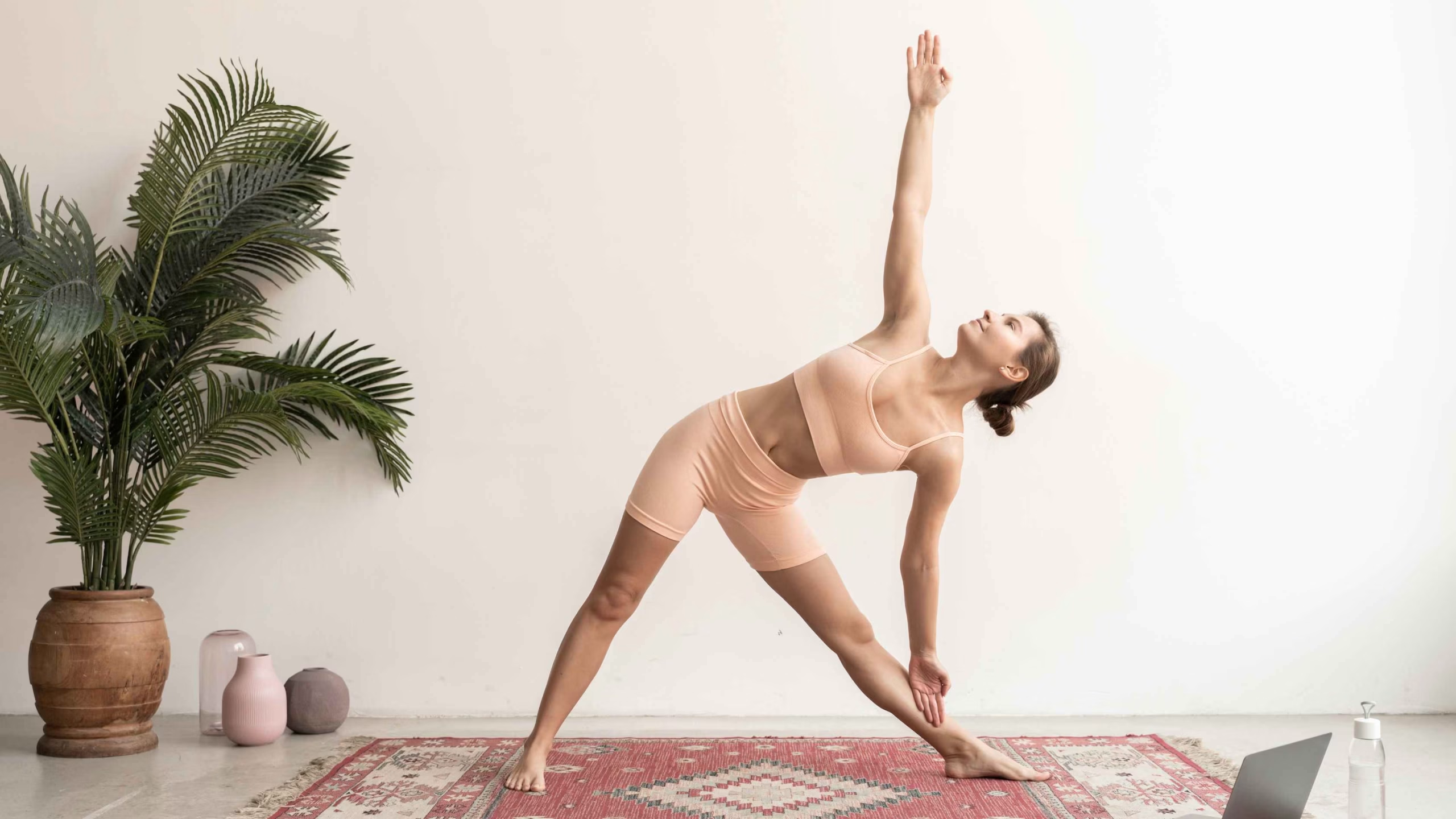
Yoga has taught me many things, but one of the most humbling lessons has been how to track progress without turning it into a silent competition. Progress can be inspiring, yet it can also become a trap. I have felt both sides of that experience, and the difference between them has shaped the way I practice today. Over time, I realized that growth in yoga is not only about what the body can do, but also about how the mind relates to change.
For a long time, I equated improvement with visible milestones. Deeper backbends, steadier arm balances, longer holds in plank all felt like proof that I was moving forward. It seemed logical to measure progress by what I could see and capture in a photo. Yet yoga slowly revealed that this approach left me restless rather than fulfilled.
Progress, I discovered, is subtle. It shows up in patience, in breath awareness, in how gently I respond to discomfort. These shifts are not flashy, and they rarely receive applause. Still, they are the foundation of a sustainable practice, and they deserve attention.
Why Progress Can Become an Obsession
Tracking growth can easily slip into obsession because the modern world rewards visible achievement. Social media amplifies this by highlighting dramatic transformations and impressive poses. I found myself comparing my practice to carefully curated snapshots of others. That comparison quietly distorted my relationship with my mat.
Obsession often disguises itself as discipline. I once convinced myself that pushing harder, stretching longer, and practicing more frequently meant I was committed. In reality, I was chasing validation. Instead of listening to my body, I was trying to prove something to an invisible audience.
The more I focused on reaching the next milestone, the less I appreciated where I was. Each achievement quickly lost its glow because my attention jumped to the next goal. This pattern created tension not only in my muscles but also in my thoughts. Yoga began to feel like a checklist rather than a refuge.
Redefining What Progress Means
A turning point arrived when I realized that flexibility and strength are only one layer of growth. Emotional regulation, resilience, and consistency are equally important markers. Some days, the most meaningful progress is simply showing up despite fatigue or self-doubt. That kind of dedication cannot be captured in a mirror.
I began to notice smaller victories. Holding steady breath during a challenging pose became as significant as mastering the pose itself. Choosing rest when my body needed it felt like maturity rather than weakness. These shifts reframed my entire perspective on improvement.
Progress also includes setbacks. Tight hamstrings after a stressful week or shaky balances during hormonal shifts are not failures. They are reminders that the body responds to life. Recognizing this helped me treat fluctuations as information instead of judgment.
The Role of Self-Awareness
Self-awareness has become my compass. Each practice now begins with a quiet check-in rather than a rigid plan. I ask myself how I feel physically, mentally, and emotionally. The answer shapes my approach far more than external expectations.
This awareness prevents me from chasing arbitrary goals. If my lower back feels sensitive, I adjust. If my energy is low, I move slowly. Tracking progress without obsessing means honoring what is true in the present moment.
Breath is my anchor in this process. Whenever I catch myself straining or mentally racing ahead, I return to the rhythm of inhaling and exhaling. The breath does not care about performance. It cares about presence.
Healthy Ways to Track Growth
I still believe in tracking progress, but I do it gently. Journaling after practice has been transformative. Instead of recording how deep I went into a pose, I note how I felt. I write about emotional shifts, mental clarity, and patterns I observe.
Photos can also be useful, but intention matters. I take occasional pictures to observe alignment and posture, not to compare or criticize. Reviewing them months later allows me to see change objectively. The key is spacing them out so they do not become daily pressure.
Another approach involves tracking consistency rather than intensity. Marking the days I practice reminds me that commitment is powerful on its own. Even short sessions count. This shift keeps the focus on devotion rather than dramatic leaps.
Letting Go of the Timeline
Impatience once dominated my practice. I wanted faster results, deeper stretches, stronger arms. The body, however, operates on its own timeline. Forcing it to accelerate often leads to injury or burnout.
Accepting a slower pace required humility. It meant admitting that progress cannot be rushed without consequences. The more I embraced patience, the more sustainable my growth became.
Letting go of a rigid timeline also reduced anxiety. Instead of calculating how long it should take to master a pose, I began enjoying the exploration itself. Curiosity replaced urgency. The journey felt lighter and more expansive.
Listening to the Body Over the Ego
Ego speaks loudly in yoga spaces. It whispers comparisons and demands recognition. I have heard that voice during classes when someone next to me effortlessly flows into a pose that challenges me. That moment tests my awareness.
Choosing to honor my body instead of my ego requires courage. It means stepping out of a pose earlier than others or using props without shame. Each time I prioritize safety over pride, I strengthen trust in myself.
This trust builds a healthier relationship with progress. Improvement becomes collaborative rather than combative. My body is no longer an opponent to conquer but a partner to support.
Celebrating Subtle Shifts
Some of the most meaningful changes in my practice are invisible. I notice them in daily life more than on the mat. Stressful conversations no longer trigger the same reactive patterns. Patience has grown in situations that once felt overwhelming.
Balance, too, has evolved beyond physical poses. Emotional steadiness feels like a quiet triumph. These developments remind me that yoga extends far beyond asana.
Acknowledging subtle shifts keeps obsession at bay. When progress includes mental clarity and compassion, the scope widens. The practice becomes about wholeness rather than performance.
The Impact of Community and Comparison
Practicing in community can be uplifting, yet it also introduces comparison. I have experienced both inspiration and insecurity in group classes. Watching others grow can motivate me, but it can also tempt me to measure myself against them.
Staying grounded in my own path requires conscious effort. I remind myself that each body carries unique history, genetics, and experiences. Comparing timelines rarely reflects the full story.
Open conversations with fellow practitioners have helped dissolve unrealistic standards. Sharing struggles normalizes fluctuation. Community becomes supportive rather than competitive when honesty replaces performance.
Rest as Part of Progress
Rest once felt like regression. Skipping a practice day filled me with guilt. Over time, fatigue and minor aches taught me that recovery is integral to growth.
Muscles rebuild during rest, and the nervous system recalibrates in stillness. Incorporating restorative sessions improved my strength and flexibility more than constant intensity ever did. That realization reshaped my schedule.
Rest also nourishes mental clarity. Stepping back prevents burnout and renews enthusiasm. Instead of obsessing over daily metrics, I learned to respect cycles of effort and ease.
Cultivating Detachment From Outcomes
Yoga philosophy emphasizes detachment from results, and applying that principle to progress changed everything. Effort remains essential, yet attachment to specific outcomes creates tension. I focus on showing up wholeheartedly, then releasing expectations.
This mindset reduces fear of failure. If a pose feels inaccessible one day, I treat it as data rather than defeat. Tomorrow may unfold differently.
Detachment does not mean indifference. It means investing fully in the process without tying self-worth to achievements. That subtle shift frees the practice from pressure.
Tracking Inner Dialogue
Monitoring my thoughts has become as important as monitoring physical milestones. I pay attention to how I speak to myself during challenging sequences. Harsh criticism signals that obsession may be creeping back in.
Replacing self-judgment with curiosity transforms the experience. Instead of asking why I am not better, I ask what my body needs. This reframing keeps growth compassionate.
Over time, kinder self-talk has spilled into other areas of life. Progress becomes less about proving value and more about nurturing potential.
Trusting the Long Game
Sustainable progress unfolds over years, not weeks. Looking back at older journal entries reveals changes I barely noticed in real time. Strength accumulated gradually. Flexibility expanded quietly.
Trusting this long arc helps me resist quick fixes. I no longer chase extreme programs promising rapid transformation. Steady, mindful practice yields deeper rewards.
The long game also fosters gratitude. Witnessing how far I have come cultivates appreciation rather than dissatisfaction. Gratitude, I have found, is a powerful antidote to obsession.
Embracing Fluctuation
No practice is linear. Some weeks feel expansive and strong, while others feel heavy and constrained. Accepting fluctuation reduces the urge to control outcomes.
Hormones, sleep patterns, stress levels, and life events all influence performance. Acknowledging these variables fosters realism. Instead of blaming myself, I adjust expectations.
Embracing fluctuation nurtures resilience. Each dip becomes an opportunity to practice patience. Each surge becomes a reminder to stay humble.
Integrating Progress Into Daily Life
The most rewarding progress manifests off the mat. Calm breathing during tense meetings reflects hours of mindful practice. Improved posture while working at a desk shows subtle strength gains.
These integrations affirm that yoga is not confined to poses. Tracking how I respond to daily stress provides richer insight than measuring flexibility alone. Life becomes the true gauge of growth.
Seeing progress in ordinary moments dissolves the need for constant physical milestones. Fulfillment arises from alignment between practice and behavior.
A Balanced Relationship With Growth
Tracking progress without obsessing is an ongoing dance. Some days I feel perfectly balanced, and other days I catch myself drifting toward comparison. Awareness gently redirects me.
Balance does not eliminate ambition. Goals still exist, but they are flexible. They guide rather than dominate.
Yoga continues to teach me that growth thrives in patience and compassion. By honoring both effort and ease, I cultivate a practice that evolves naturally. Progress becomes a quiet companion rather than an all-consuming pursuit, and that shift has deepened my relationship with yoga in ways I never anticipated.



The Long-Term Mindset of Strong Practitioners

Habit Stacking for Daily Yoga

How to Reignite a Stalled Practice

Mastering Patience in Skill-Based Poses

The 1% Better Method on the Mat

The 7-Day Reset Challenge
The 1% Better Method on the Mat

The 25-Minute Sweat Flow That Feels Like a Reset Button

The Silent Strength Flow (Minimal Transitions, Maximum Burn)
The 7-Day Reset Challenge

Resetting After Travel and Long Flights
